Fusion splicing · testing · repairs
Fibre optic splicing
We fusion-splice optical fibre, measure the loss of every link and hand over a report with the measured values. For residential and office buildings, companies with fibre between buildings, server rooms, hospitals and schools, CCTV, solar and industrial installations, electrical contractors and operators.
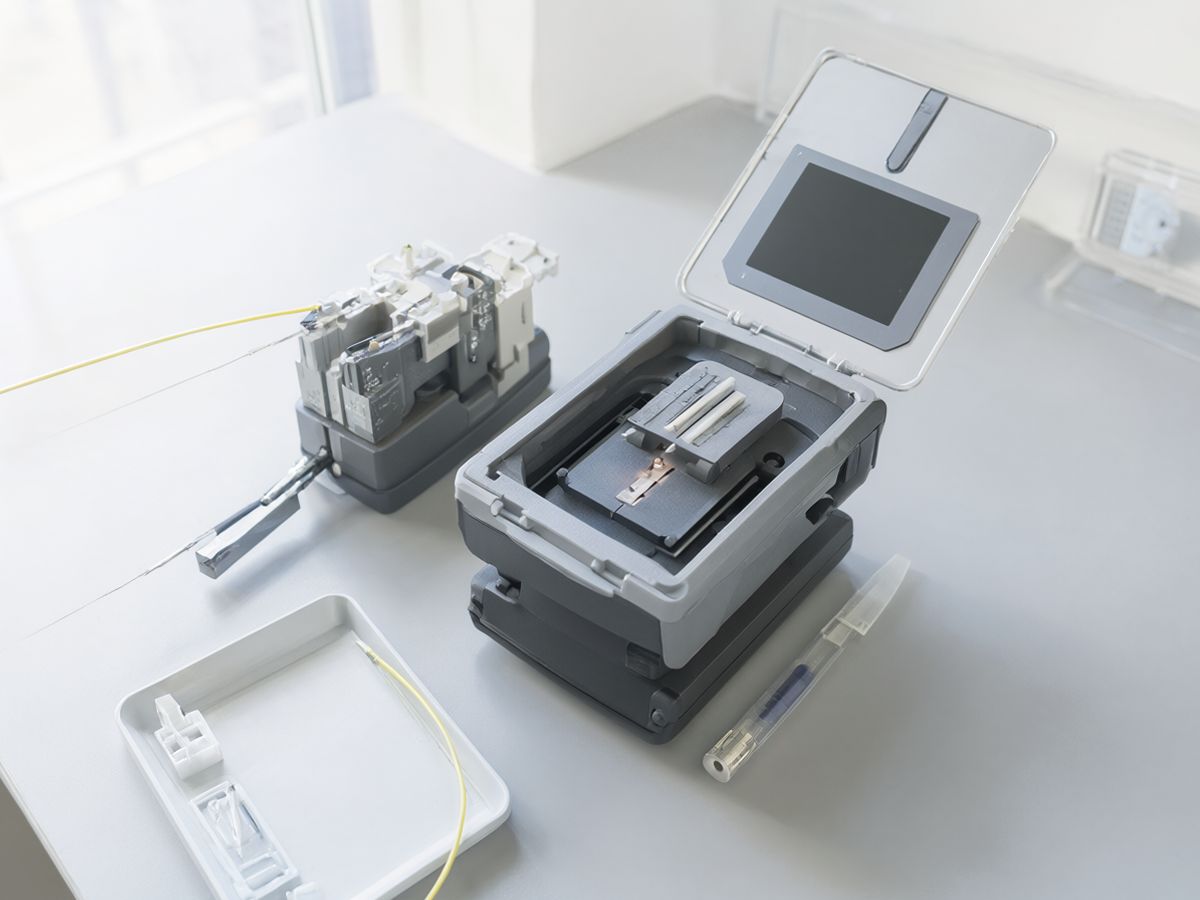
- Fusion splicing
- Single-mode and multi-mode fibre — pigtails, patch panels and ODFs, outdoor splice closures, building risers and floor distributors.
- Every link tested
- Loss per link with a light source and power meter, and a visual fault locator (VFL) for breaks and bad connectors.
- Emergency repairs
- We find the break in a fibre link, splice it and test it again — including call-outs outside working hours, by arrangement.
- A report per fibre
- The loss of every splice and every link, in a PDF you attach to the project or the building handover.
Scope
What we do
For anyone who has fibre or is putting it in — a facility manager, a company with several halls, a server room, an electrical contractor or integrator who needs a splicing subcontractor, and internet operators.
Stack
- Single-mode
- Multi-mode
- ≤ 0.1 dB per splice
- ODF
- FTTH / FTTB
- GPON
- VFL
We own a fusion splicer and the accompanying fibre tooling. We work to at most 0.1 dB loss per splice, and the loss of every link is measured and documented.
Fusion splicing
Single-mode and multi-mode fibre:
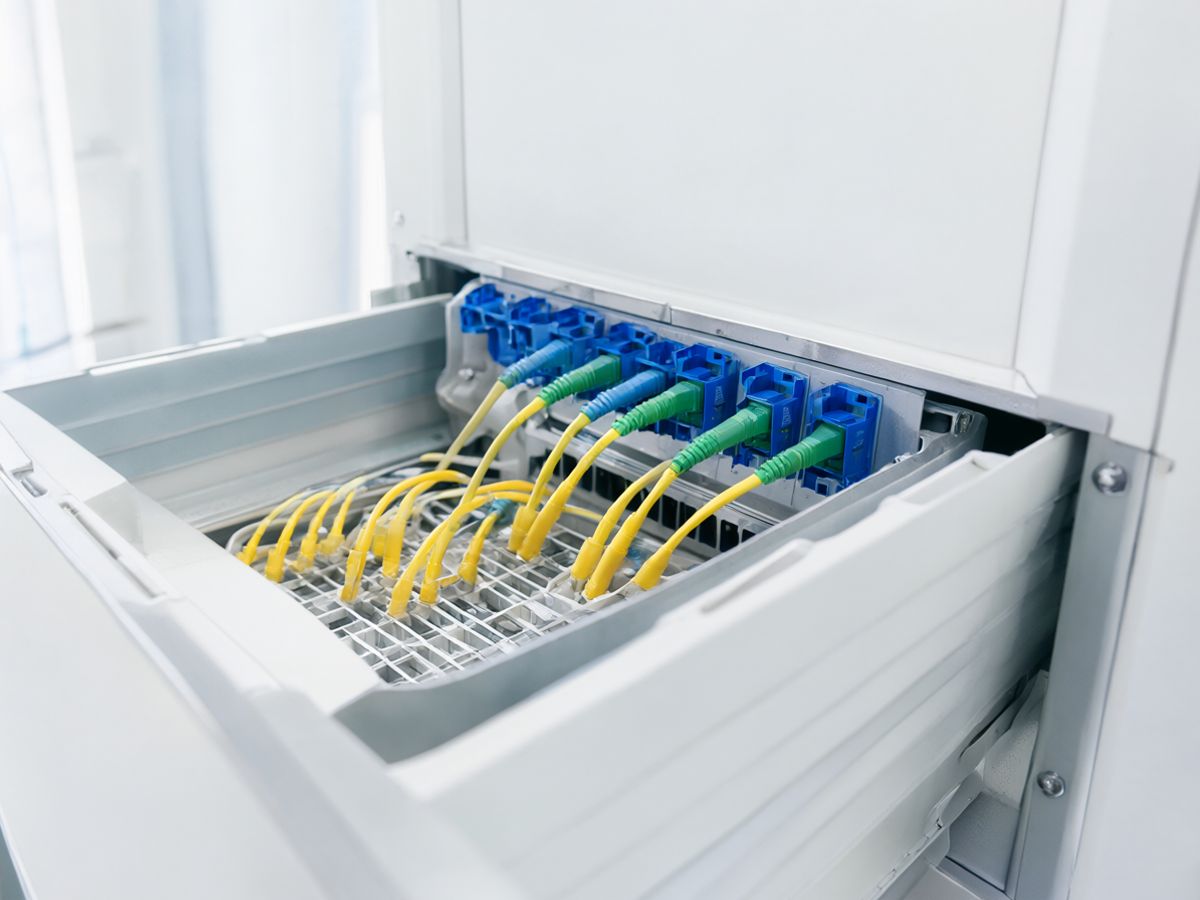
- pigtails on patch panels and ODFs (optical distribution frames)
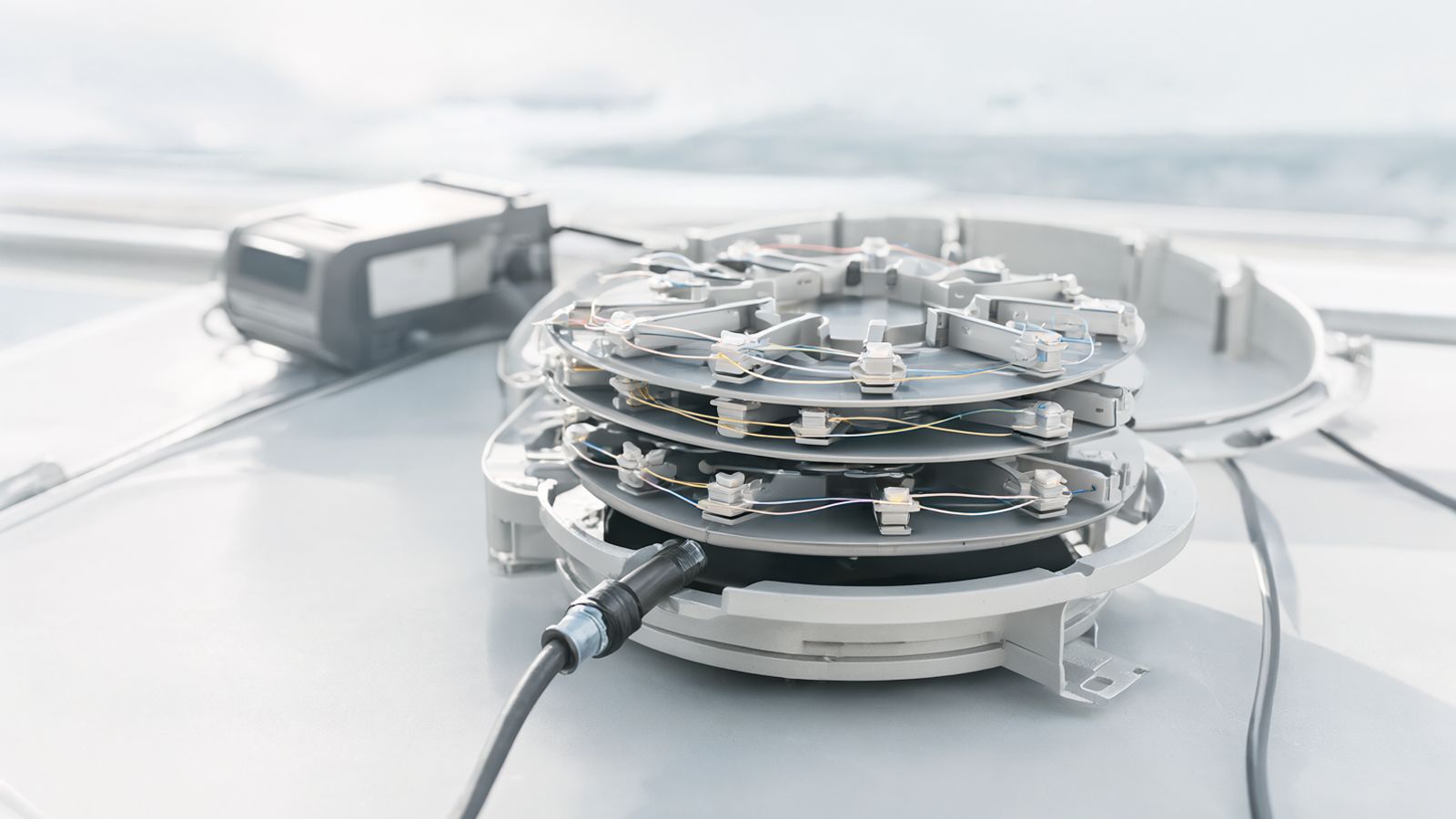
- outdoor splice closures — cable joints and branch-offs along a route
- building risers and floor distributors
- cables between buildings, halls and sites on the same campus
Termination and testing
- loss per link with a light source and power meter, at the wavelengths your equipment uses
- comparison with the calculated link budget — length, splices and connectors
- visual fault locator (VFL) for breaks, tight bends and bad connectors
- OTDR testing on request, through a partner — not part of our own equipment
Repair of broken links
- locating the break and fitting a closure or replacing a section of cable
- re-splicing and testing the link after the repair
- emergency call-out, including outside working hours by arrangement
Inside buildings (FTTH / FTTB)
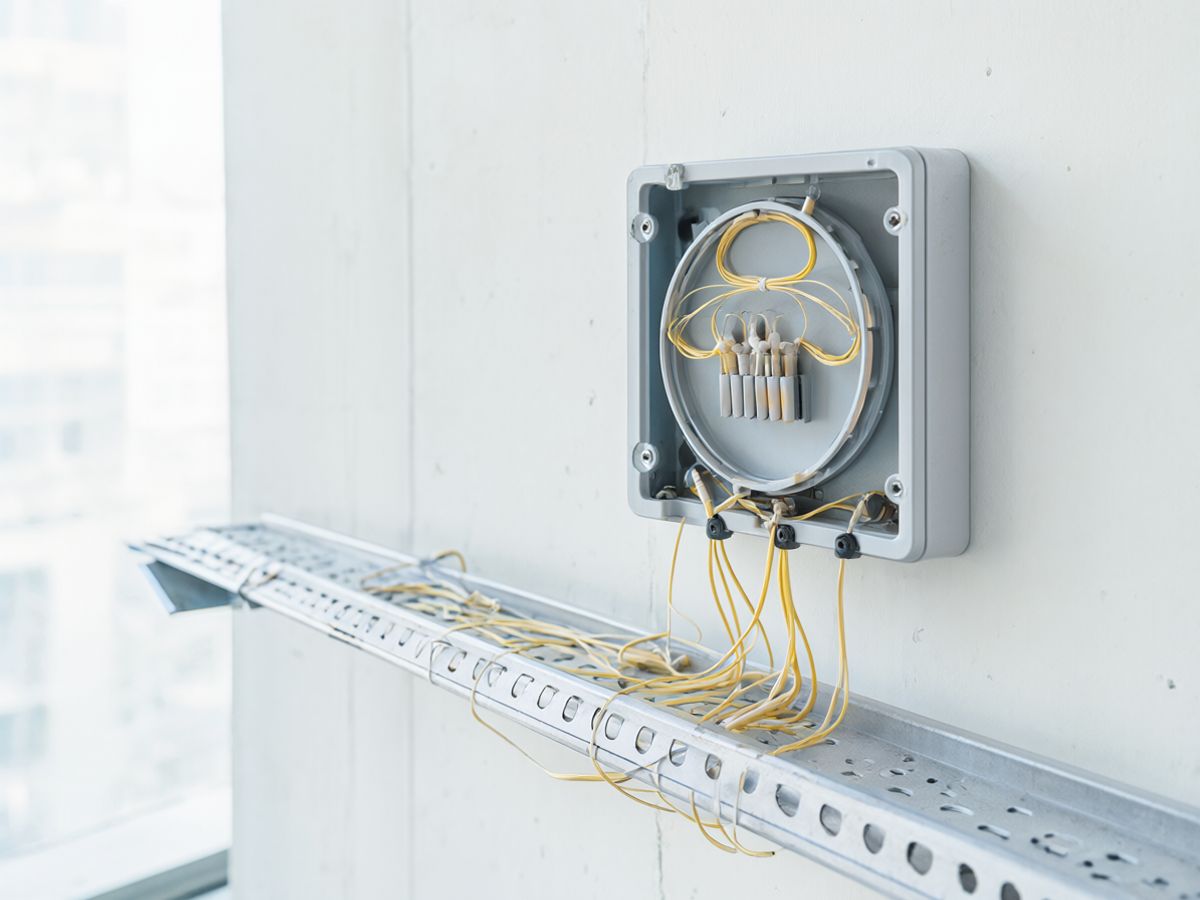
- riser cabling and floor distribution boxes
- drop cables to apartments and offices, terminated in a wall outlet
- patching in server rooms and racks
GPON and point-to-point installations
- from the OLT or switch to the ODF
- splitter cabinets and fibre allocation to a plan
- hand-off on an ONU/ONT or an SFP, with a check that the link comes up
Documentation
- a PDF report per fibre — the loss of every splice and the total loss of the link
- the fibre allocation plan by tray, port and cabinet
- photos of the cabinets and closures after closing
How we work
From the route to the report.
- 01
Scope and survey
What is being spliced, how many fibres, single-mode or multi-mode, where the cabinets and routes are. For larger jobs we visit the site first.
- 02
Preparation and splicing
Stripping, cleaning, precision cleaving, fusion splicing and a heat-shrink sleeve on every splice. Fibres are laid into trays to a plan.
- 03
Testing
We measure the loss of every link with a light source and power meter and compare it with the calculated link budget. A splice that doesn't meet it is redone.
- 04
Report and handover
A PDF with values per fibre and per link, the fibre allocation plan and photos of the cabinets and closures.
Questions
Frequently asked questions
What loss do you work to?
At most 0.1 dB per fusion splice. A splice with higher loss is redone. The loss of every link is measured and written into the report.
Do you only work for internet providers?
No. We work for residential and office buildings, companies with fibre between buildings and halls, server rooms and data centres, hospitals and schools, CCTV installers, solar and industrial installations, and electrical contractors and integrators who need a splicing subcontractor. Operators are one of those groups.
Do you have an OTDR?
OTDR testing is not part of our own equipment. When it is needed — for longer routes, or to locate a fault along a cable precisely — we arrange it through a partner, on request. We measure link loss ourselves with a light source and power meter, and find breaks and bad connectors with a visual fault locator (VFL).
Can you repair a broken fibre cable?
Yes. We find the break, fit a closure or replace a section of cable, splice it and test the link again. For emergencies we come out outside working hours too, by arrangement.
Do you lay cable as well?
We do in-building work — risers, floor boxes, drop cables to apartments and offices, and patching in racks. Digging and laying outdoor routes is usually done by your civil works contractor, and we come in for the splicing and testing.
How much experience do you have?
We are an operator ourselves and splice on our own network regularly — from home connections to closures on trunk routes. The same tools and the same criteria apply to your job.
Need fibre spliced and tested?
Tell us what is being spliced, where and how many fibres — we'll propose the scope and a timeline.