Antennas · feedlines · spectrum · up to 3 GHz
RF measurements & antenna lab
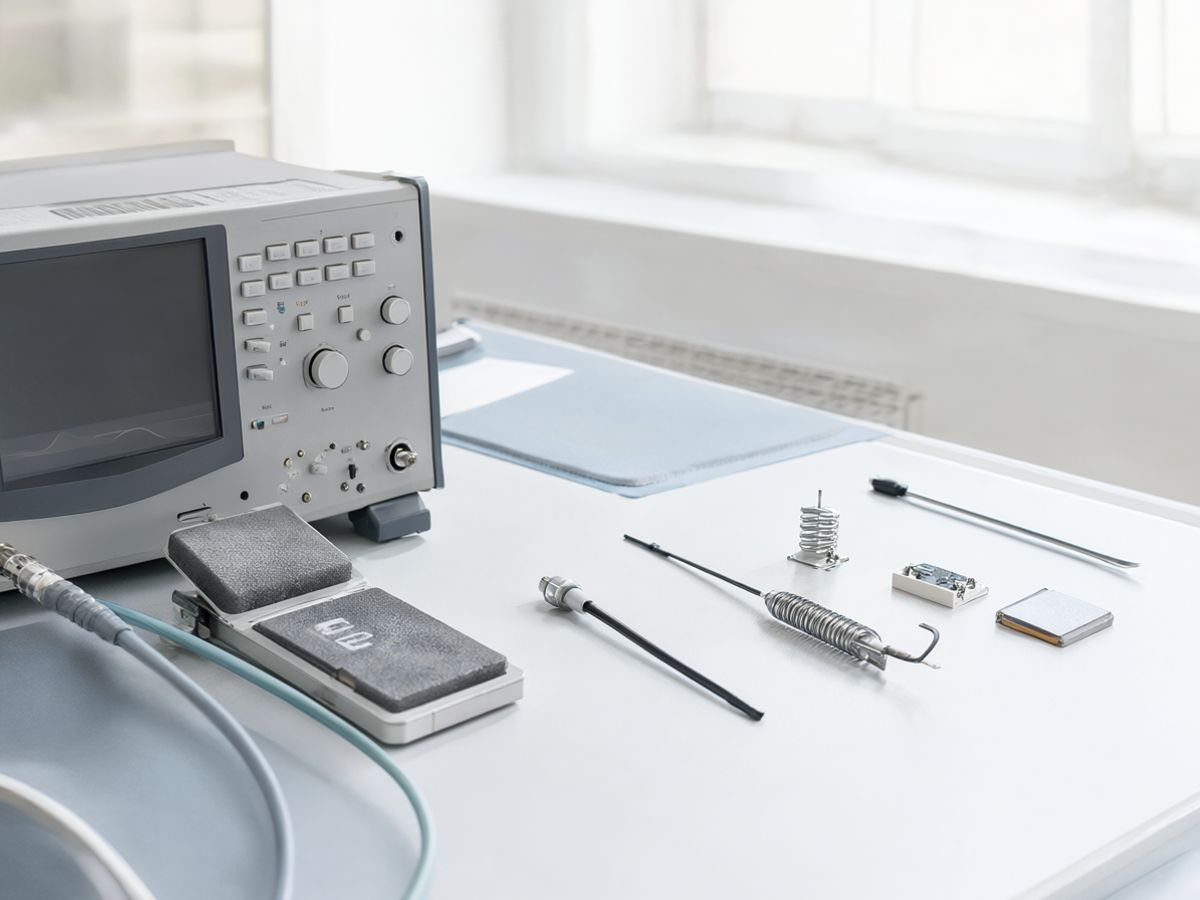
We measure antennas, cables and RF assemblies with a network analyser (VNA) and a spectrum analyser, up to 3 GHz — from VHF/UHF through the ISM and LoRa bands and GSM/LTE to 2.4 GHz Wi-Fi. In our lab or on your site, with a PDF report and plots.
- Antennas and feedlines
- VSWR, return loss, impedance, bandwidth, insertion loss and distance-to-fault, measured with a network analyser (VNA).
- Spectrum and interference
- Noise floor, unwanted emissions, unknown transmitters, ISM and LoRa band occupancy and 2.4 GHz channel surveys.
- Pre-compliance
- Emissions and antenna matching checked on your prototype before it goes to an accredited lab.
- Antenna design
- An antenna and matching network for your IoT, LoRa or ISM device, measured on the board itself.
Scope
What we measure — up to 3 GHz
Our test equipment covers up to 3 GHz. For IoT and electronics makers, radio system integrators, industrial sites, amateur radio and broadcast, and companies preparing products for certification.
Stack
- VNA
- VSWR / RL
- DTF
- Spectrum to 3 GHz
- 433 / 868 MHz
- LoRa
- 2.4 GHz
We measure with Agilent and Keysight instruments, covering up to 3 GHz. We do not measure the 5 and 6 GHz bands, 60 GHz or licensed microwave links.
Antennas and feedlines — network analyser (VNA) measurements
For VHF and UHF, the 433 and 868 MHz ISM bands, LoRa, the GSM and LTE bands and 2.4 GHz (Wi-Fi, Bluetooth, Zigbee):
- VSWR and return loss across the band
- impedance and Smith chart, resonant frequency and bandwidth
- insertion loss of cables, jumpers, adapters and RF assemblies
- distance-to-fault (DTF) — the exact location of damage, moisture or a bad connector on a cable
Spectrum analysis and interference hunting up to 3 GHz
- noise floor and band occupancy over time
- unwanted emissions from devices — harmonics, spurious emissions, power-supply noise
- locating unknown and faulty transmitters
- 2.4 GHz channel surveys and LoRa and ISM band occupancy on site
Filters, duplexers and combiners
- tuning and verification against the radio system’s specification
- passband, rejection and isolation between the transmit and receive paths
Pre-compliance checks
- emissions and antenna matching on your prototype, before it goes to an accredited lab
- comparison with the limits in the standard that applies to your product
- proposed changes — matching network, filtering, board layout — and a re-measurement
Lab measurement reports
- antennas, cables and RF assemblies, individually or as a sample from a batch
- a PDF report with plots, a table of values and the measurement conditions
Antenna design for IoT, LoRa and ISM devices
- choosing and designing the antenna — printed on the board, chip antenna or external
- a matching network measured on the device itself, in its enclosure
How we work
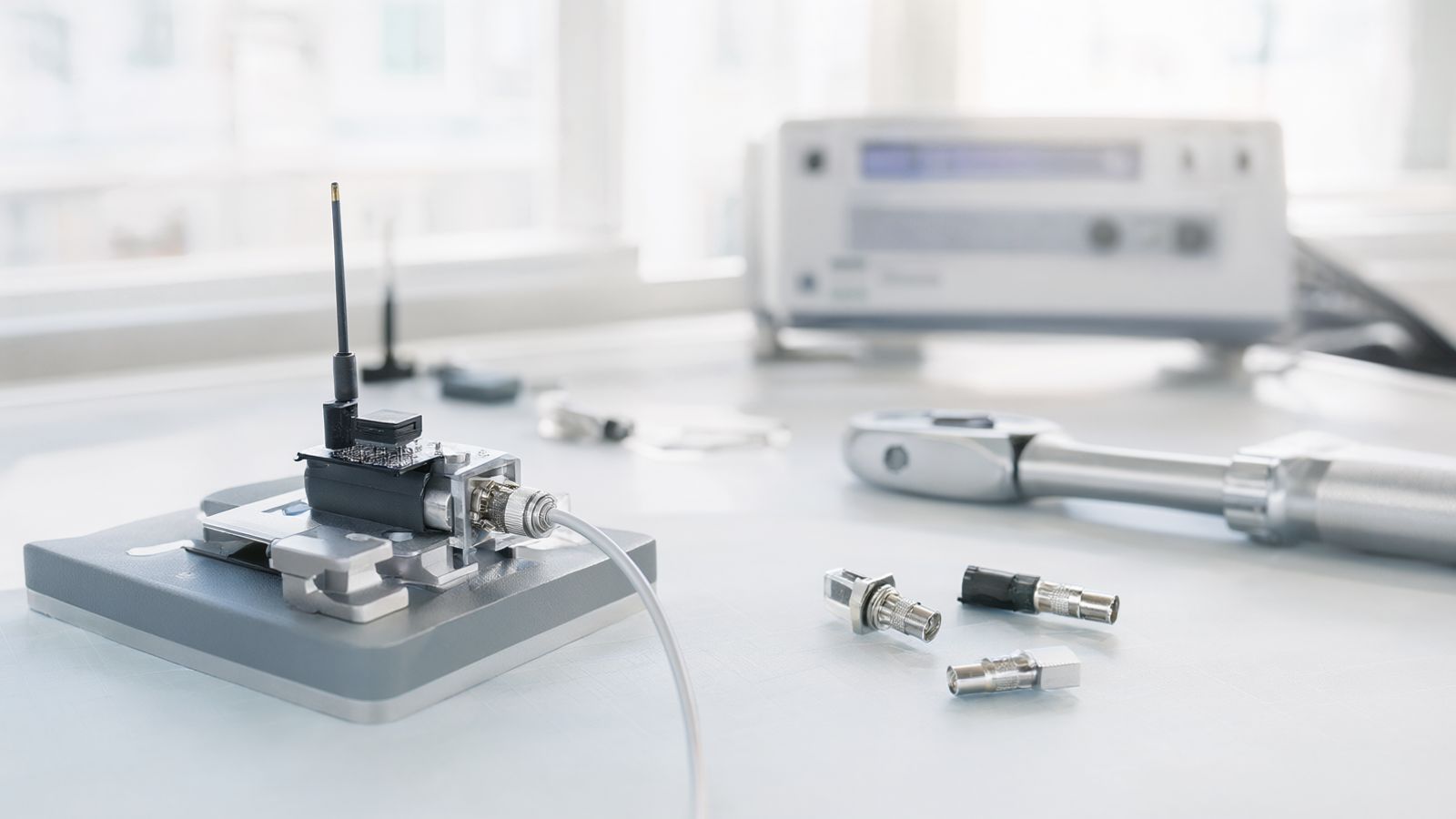
From sample to a report you can file with your documentation.
- 01
Agree the scope
The device or system, frequency bands, what we measure and the acceptance criteria — for example VSWR below 1.5 across the band.
- 02
Measure
In the lab or on site, with calibrated instruments and the measurement conditions and setup recorded.
- 03
Analyse and tune
Comparison with the specification, the cause of every deviation and, where it is part of the job, tuning the match or filter and measuring again.
- 04
PDF report
Plots, Smith chart, tables of measured values, photos of the setup and recommendations.
Questions
Frequently asked questions
Up to what frequency do you measure?
Up to 3 GHz. That covers VHF and UHF, the 433 and 868 MHz ISM bands, LoRa, the GSM and LTE bands and 2.4 GHz (Wi-Fi, Bluetooth, Zigbee). We do not measure 5 and 6 GHz or above.
Do you issue a certificate of conformity?
No. We are not an accredited lab. We run pre-compliance measurements so that the device you send to an accredited lab has a good chance of passing first time.
What do we get after the measurement?
A PDF report with plots (VSWR/RL, Smith chart, DTF or spectrum, depending on the job), a table of measured values, the measurement conditions and recommendations.
Can you come on site?
Yes, for spectrum surveys and feedline and antenna measurements at your facility — in Serbia and the region. Work at height is organised with your contractor's certified crew.
How many samples should we send?
One sample is enough for development. For checking a batch of antennas or cables we agree the sample size against your acceptance criteria.
Antenna range falling short, and the device is due for certification?
Describe the device, the bands and the problem — we'll propose the measurements and a timeline.